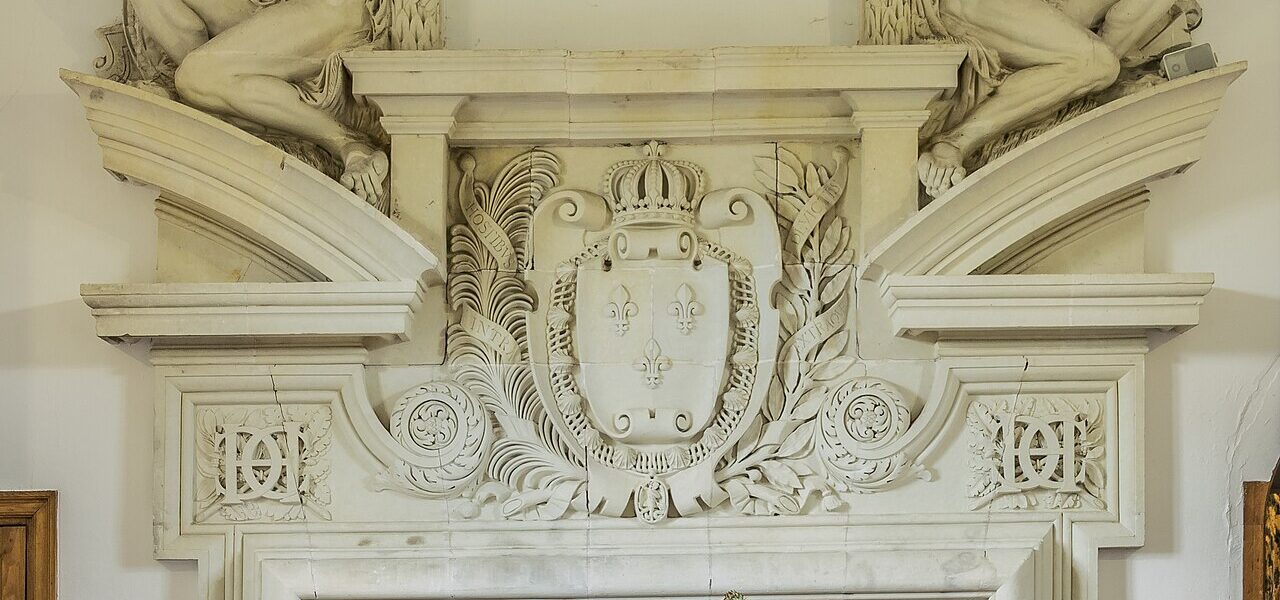
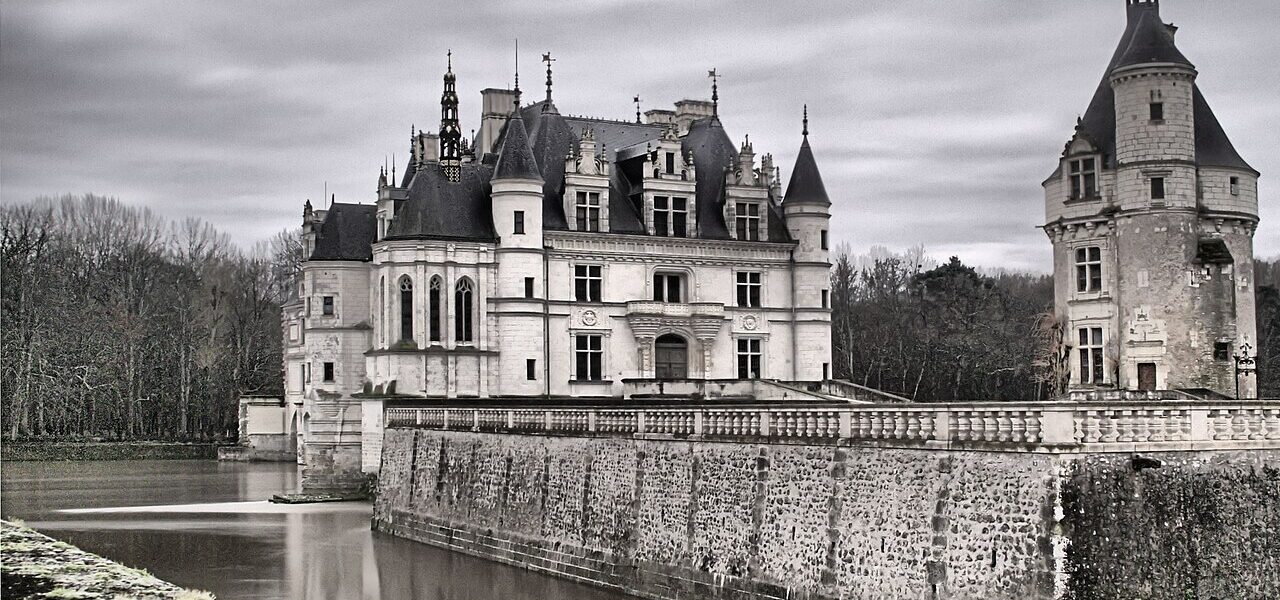
Rising elegantly over the calm waters of the River Cher, the Château de Chenonceau is one of France’s most photographed and beloved monuments. Known as the “Ladies’ Castle,” it owes its distinctive arched gallery to Catherine de Medici, who added it in 1576 after wresting control from Diane de Poitiers, the mistress of King Henry II.
Construction began in 1514 on the foundations of an old mill. The main château, designed by Philibert de l’Orme, was completed by 1522. Its most recognizable feature — the five-arched bridge spanning the Cher — was built between 1556 and 1559 for Diane de Poitiers, before Catherine ordered the two-story gallery to be constructed atop it. During World War I, the gallery served as a military hospital, and during World War II, the Cher marked the boundary between occupied and free France, allowing the château to serve as a crossing point for refugees.
The gardens of Chenonceau are equally magnificent, divided into two formal parterres: the Garden of Diane de Poitiers to the east, and the Garden of Catherine de Medici to the west. Inside, the château is lavishly furnished with 16th-century tapestries, Renaissance paintings, and original floors. A wax museum in the former stables traces five centuries of history through remarkable women who shaped Chenonceau’s destiny.
Key Facts
| Built | 1514–1559 |
|---|---|
| Style | French Renaissance |
| Rooms | 60 furnished rooms |
| Region | Loire Valley |
| Entry | €17.00 adults |
| Open | 9:00–19:00 |
| UNESCO | World Heritage Site |