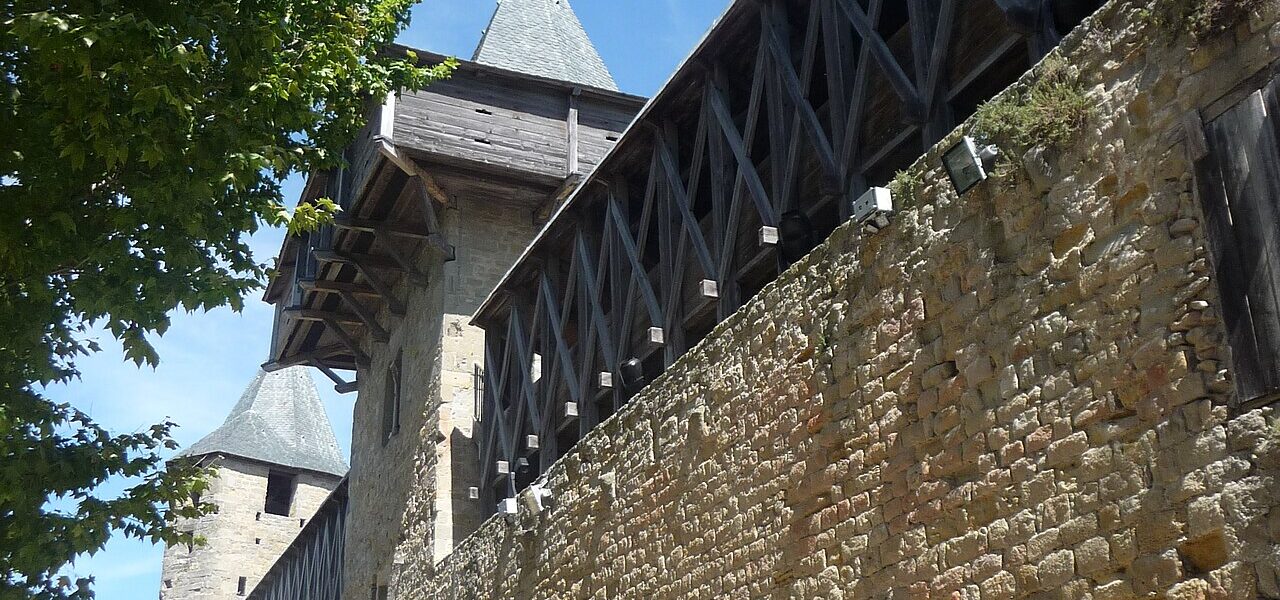
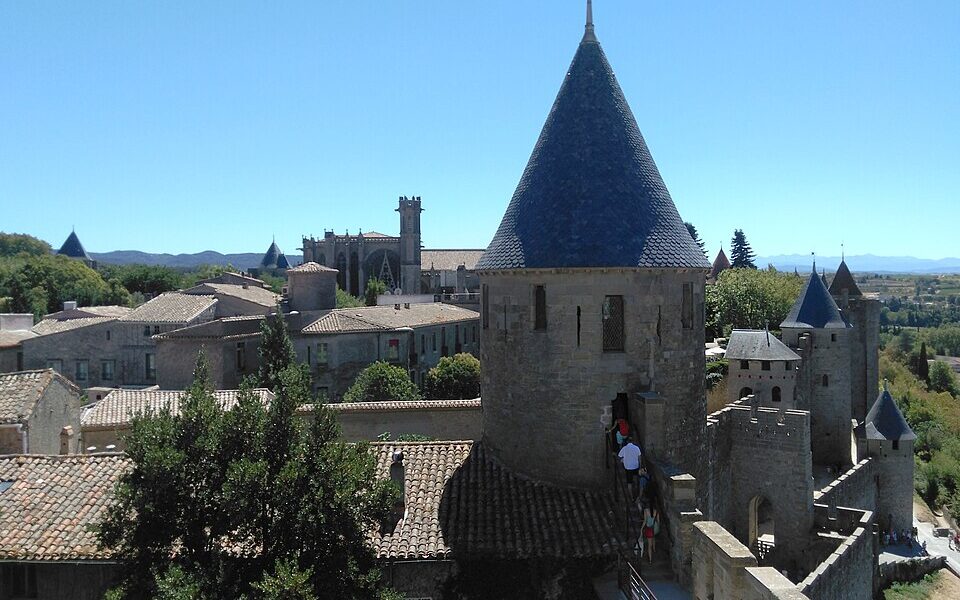
Rising from the plain of the Aude River like a vision from an Arthurian legend, the Cité de Carcassonne is Europe’s largest and best-preserved medieval walled city. Its double ring of ramparts, 52 towers, and fairy-tale silhouette — dramatically illuminated at night — draw over three million visitors a year and stand as one of France’s most extraordinary UNESCO World Heritage Sites.
The site has been fortified since pre-Roman times, but the city reached its current form during the 12th and 13th centuries, when the viscounts of Carcassonne — and later the French crown — constructed the remarkable double fortification system that survives today. The inner wall, dating from Visigothic and Carolingian periods, was reinforced by the outer wall added by Louis IX and Philip III in the 13th century. The Château Comtal within the walls served as the seat of the viscounts before becoming a royal fortress.
The city played a central role in the Albigensian Crusade (1209–1229), a campaign launched by Pope Innocent III against the Cathar heresy that had taken root in the Languedoc. After the crusade, Carcassonne became a key frontier fortress on the border between France and the Kingdom of Aragon. The 19th-century architect Eugène Viollet-le-Duc undertook a sweeping restoration of the walls and towers between 1853 and 1879, controversially adding pointed slate rooftops to the towers that some historians dispute. Today, the restored Cité is considered one of the most complete examples of medieval military architecture in the world.
Key Facts
| Built | Pre-Roman fortification; major medieval works 12th–13th c. |
|---|---|
| Style | Medieval military architecture |
| Rooms | 52 towers, double ramparts, Château Comtal, Basilica Saint-Nazaire |
| Region | Occitanie |
| Entry | €10.00 adults (Château Comtal), ramparts free |
| Open | 10:00–17:30 (Château Comtal) |
| UNESCO | World Heritage Site |